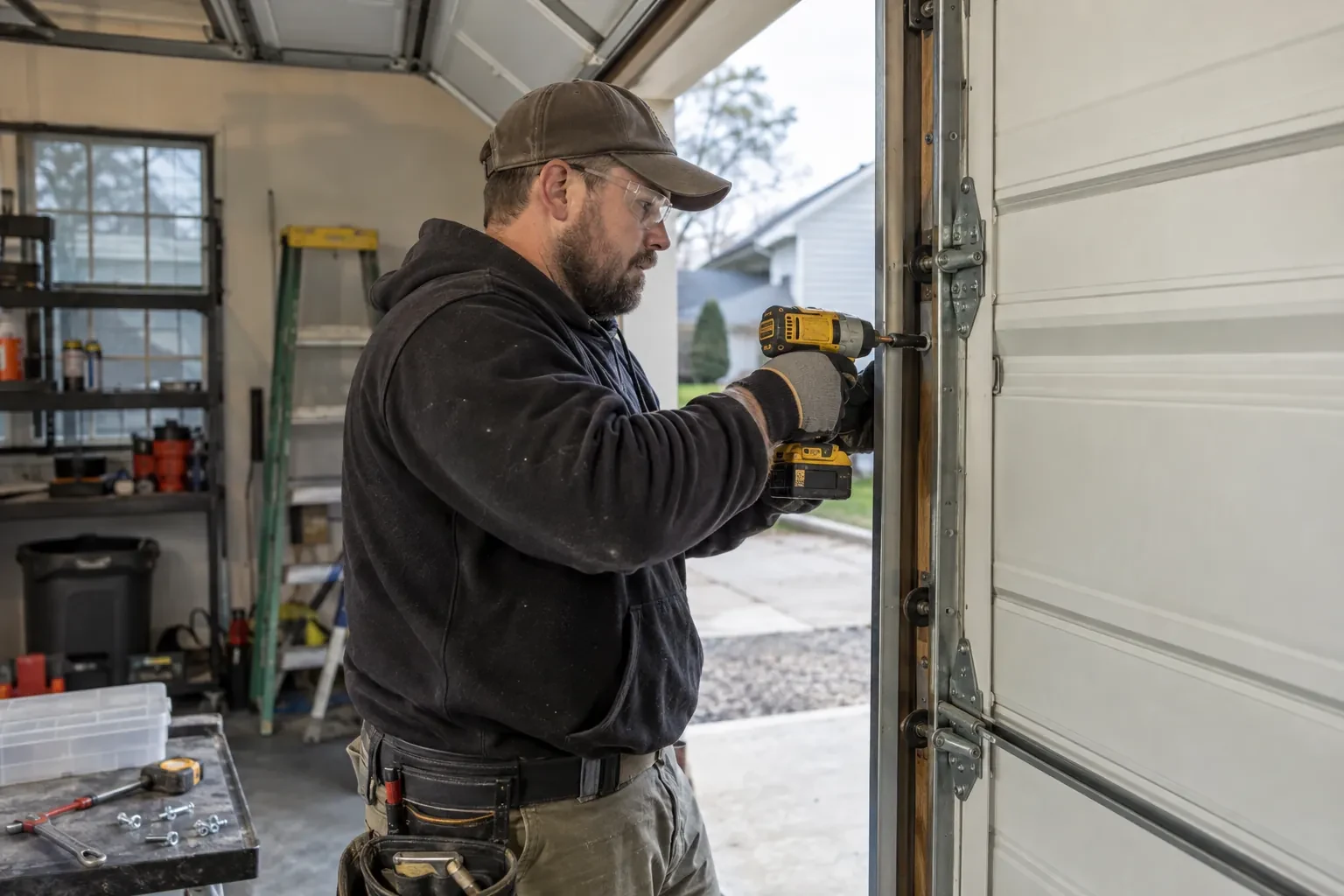
Garage Doors · Kitchener
Reading for homeowners
Safety first, then convenience, then looks. That is the order we think about garage doors, and it is the order these articles follow. Start with the sensor test; it takes a minute.
- Issue 1Garage Door Perimeter Weatherstrip: step by stepWhen the work is finished you have a door that closes against a soft, continuous line of contact on both sides and across the top. From inside with the lights off there is no daylight at the edges…Read
- Issue 2Off-Track Garage Door Reset: before you callThe morning after a thaw the opener groaned, the door stayed stuck to the icy floor for a second, then lurched up crooked. It stopped halfway with a grinding scrape and has not moved since.Read
- Issue 3Smart Garage Controller Setup: what shapes the quoteBecause someone closing a door they cannot see needs to give anyone near it a warning. The operator standard for garage door openers requires an audible alarm and a flashing light for several seconds…Read
The questions that come up
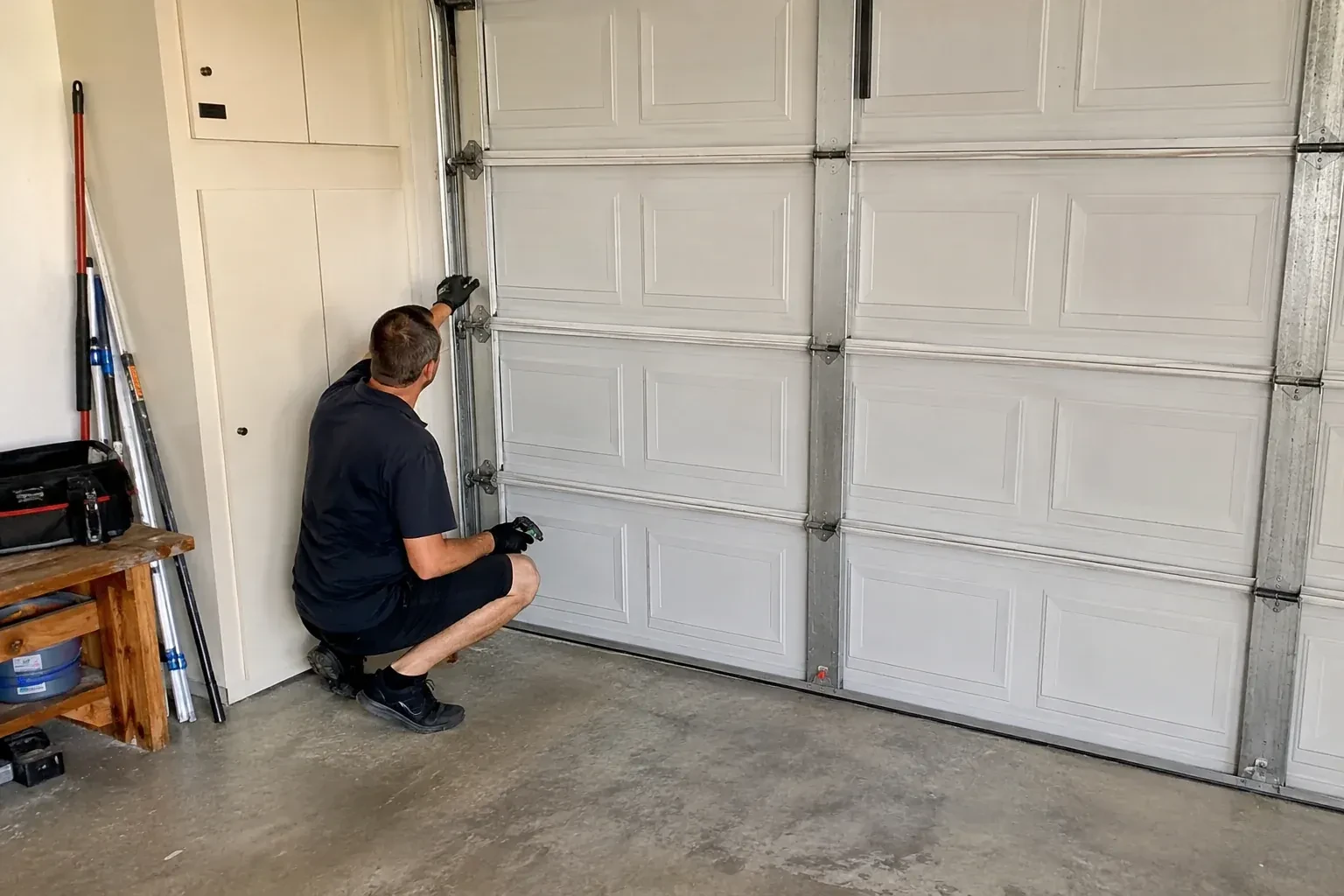
Repair & Maintenance
Why does my door reverse on the way down for no reason?
Most often it is the photo eyes. A sensor knocked slightly out of line, a lens with a film of road grime, a loose wire, or low afternoon sun shining straight into one eye will each break the beam as far as the opener is concerned. The next candidates are a down-force setting that has drifted, a binding roller or a door that has gone out of balance. The inspection checks each in turn. Garage Door Safety Inspection
How long does a tune-up take?
For a single or double residential door with an opener, allow roughly an hour to two hours on site. The inspection and the two observed cycles take a fixed amount of time; the rest depends on how many fasteners have loosened, whether the sensors need realigning and whether you approve a small part replacement, such as a worn roller, during the same visit. Spring or cable work, if found necessary, is scheduled as its own job. Garage Door Tune-Up
My car is trapped inside. Can I lift the door by hand to get it out?
Lifting a crooked door is where most injuries around this problem happen, because the springs and cables are loaded unevenly and the door can shift suddenly. Tell the technician on the phone that a vehicle is inside; getting it out is part of the plan, and the door will be supported and levelled before it is raised. A short wait is far cheaper than a bent section or a hand caught between panels. Off-Track Garage Door Reset
Can a dent be repaired instead of replacing the section?
Sometimes. A shallow dent in the middle of a steel skin, away from joints and hinge points, can often be eased out or filled, sanded and painted. Damage that creases the metal, reaches a joint or an end stile, bends a hinge point, or kinks a strut affects how the section carries load as the door moves, and a new section is the sound repair there. The technician tells you which category your dent falls into. Garage Door Panel Replacement
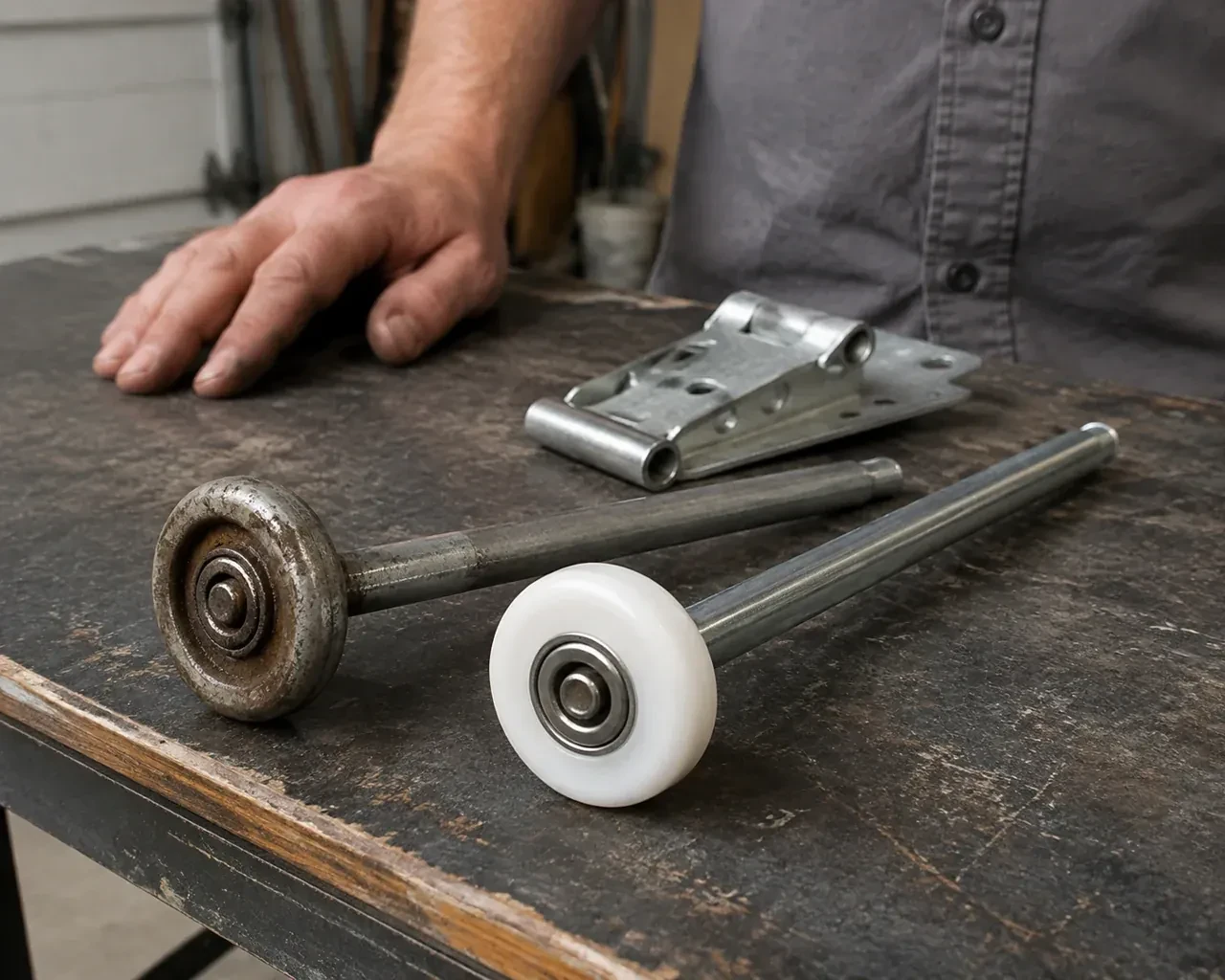
Springs & Hardware
Should I replace rollers when the springs are replaced?
It is a common and sensible pairing. Rollers and springs are the two most frequently replaced parts on a door and wear on similar timelines, so a door that has used up its springs has usually worn its rollers too. Doing both in one visit means the door is secured and the opener disconnected once, and the bottom brackets, which are handled for spring work anyway, receive new rollers while they are accessible. Ask for the rollers to be checked whenever spring work is booked. Garage Door Roller Replacement
How many hinges does a typical door have?
Count the joints between panels and multiply. A single door usually carries two edge hinges and one centre hinge per joint, so a four-panel door has three joints and nine hinges. A double door adds one or two more centre hinges per joint to keep the wider panels flat. The top panel uses adjustable top fixtures rather than hinges, and the bottom corners use bottom brackets, which are different parts. Garage Door Hinge Replacement
Can a low-headroom or high-lift layout be fitted to my existing door?
Often, yes, and it is a track job with a spring job attached. Low-headroom dual track lets a door open under a low ceiling or a beam, while high-lift track carries the door further up the wall to clear a car lift or storage. Each changes the horizontal run, the curve, the top fixtures and usually the cable drums and spring turns. The technician measures headroom, sideroom and backroom first and confirms the door suits the change. Garage Door Track Repair or Replacement
What are garage door cables made of?
They are galvanized aircraft-type wire rope: many fine steel wires twisted into strands, and the strands laid around a core, which gives a cable that bends around a small drum thousands of times without fatiguing. One end carries a swaged stop or a loop for the drum, the other a loop that fits over the bottom bracket pin. Diameter and length are chosen for the door's weight and height. Garage Door Cable Replacement
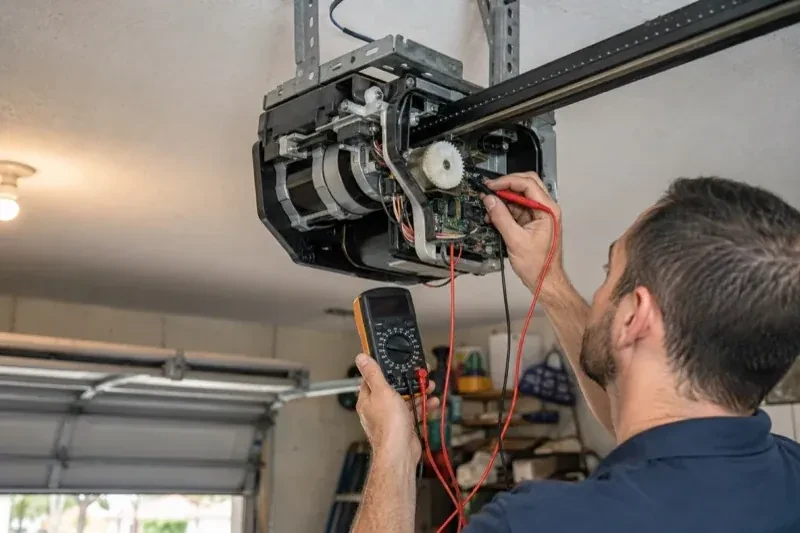
Openers & Access
Why does my door go back up when I try to close it?
The opener believes something is in the way. Either the photo-eye beam near the floor was broken, misaligned or blocked, or the door met more resistance than its force setting allows, often from a frozen seal, stiff rollers or a travel limit set slightly too long so the door hits the slab. The indicator light on the head unit usually tells which of the two it was, and the technician confirms it by testing rather than guessing. Garage Door Opener Diagnosis and Repair
Should I oil the chain?
Follow the opener's manual, and lean toward less. Many makers ask for the chain to be left dry or given only a very light treatment, because a heavily oiled chain collects grit that grinds the sprocket and drips onto the car. The grease that matters is white lithium on the rail where the trolley runs, renewed every two or three years, and on the gears inside the head, which the technician packs during a repair. Penetrating sprays are kept away from the whole drive. Chain-Drive Opener Repair
How long does a belt-drive repair take?
A tension adjustment with the safety tests is a short visit. Replacing the belt, trolley or idler pulley, then phasing the motor, relearning limits and running the reversal tests, is usually an hour or two. A gear-and-sprocket kit at the motor head takes longer because the head unit is opened. If the balance test turns up spring work, that is agreed as a separate job with its own time. Belt-Drive Opener Repair
Chain or belt: which should I choose?
Both move the same doors, so the choice is about sound and setting. Chain is the sturdy, simple workhorse and a fine fit for a detached garage or a workshop where a little noise is nobody's concern. Belt is the pick when a bedroom, nursery or office shares a wall or floor with the garage, because it starts and stops softly and hums rather than rattles. If the ceiling is crowded, a wall-mounted unit beside the spring shaft removes the rail altogether. Garage Door Opener Replacement
Installation & Upgrades
How is the old door removed?
Technicians disconnect the operator, stabilize the assembly and control the spring system before detaching cables or high-tension fixtures. Sections are supported and separated in sequence, followed by track and related hardware. The agreed scope states whether removed materials are taken away, while site protection keeps nearby finishes and belongings clear during dismantling. Sectional Garage Door Replacement
What makes a steel garage door insulated?
Insulated steel sections contain a core material between or behind steel skins, depending on the product construction. The core reduces heat flow through each section and often adds rigidity. Section joints, glazing and perimeter seals also influence how the complete opening performs, so compare published information for the exact assembled door rather than judging by thickness or appearance alone. Insulated Steel Garage Door Installation
Should the door be inspected after a severe wind event?
An assessment is sensible when the door shows a new shape, sound, gap, scrape, or operating change. A technician examines sections, struts, hinges, rollers, tracks, anchors, cables, springs, and the opener connection as one system. Comparing those findings with the installation record helps identify whether adjustment, a matched component repair, or broader work is appropriate. Wind-Rated Garage Door Replacement
Can a carriage-house door work with low headroom?
It often can, provided the available space is measured and a suitable track and spring arrangement exists for the selected door. Low-headroom layouts change how the top section turns and where hardware sits above the opening. Ceiling obstructions and opener geometry must be considered at the same time, so this condition belongs in the survey before the door configuration is ordered. Carriage-House Garage Door Installation
On-site assessment preferred
Request a visit
Tell us what the door is doing. Let us take a look.