Openers · Kitchener
Chain-Drive Opener Repair
The rail shakes when the door runs. The steel straps holding it to the ceiling have worked loose, the chain rattles the length of the garage, and a bolt has already dropped onto the hood of the car.
Chain-Drive Opener Repair
In plain words
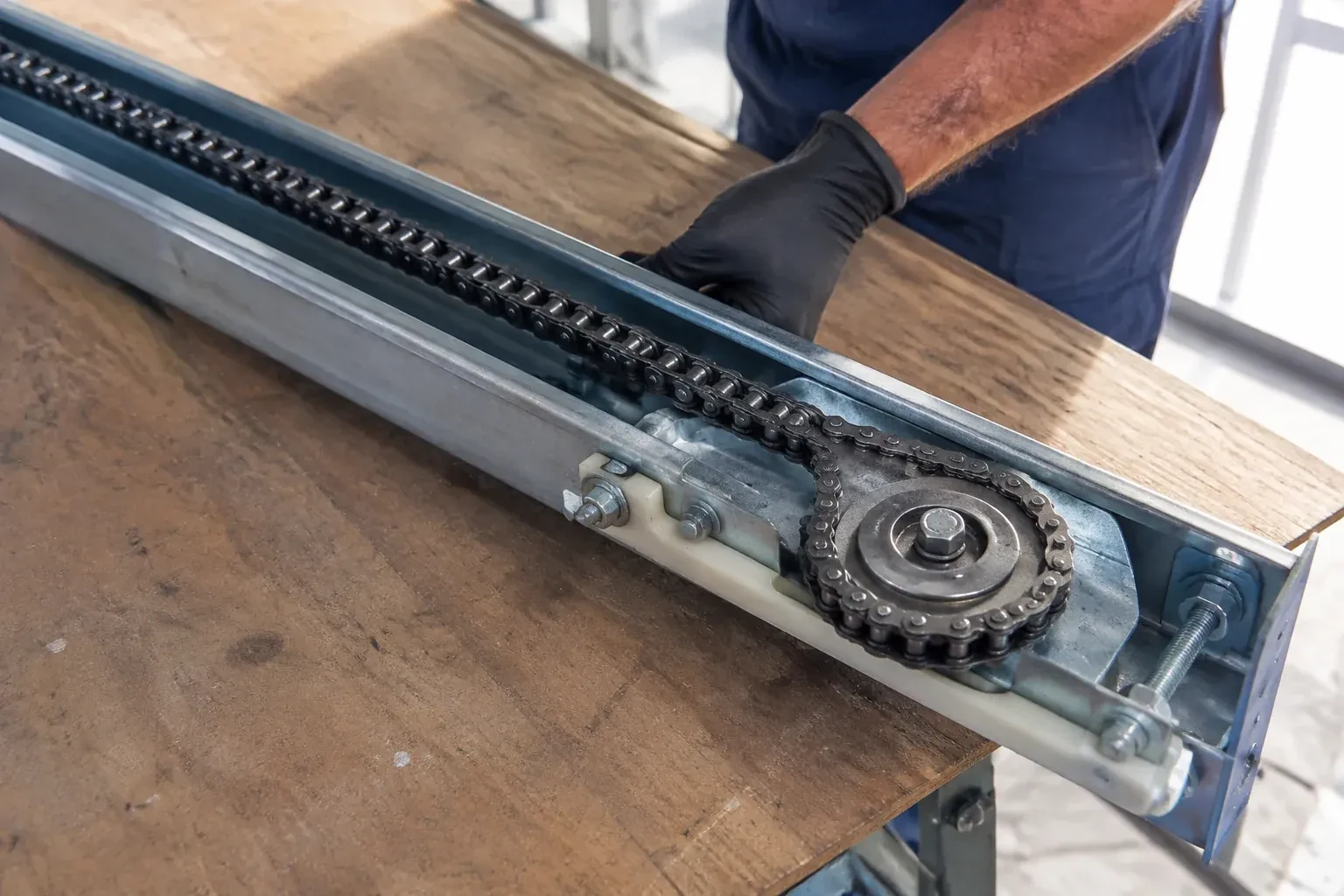
A chain drive is never silent, but it should be steady. New rattles, clanks and grinding each point somewhere specific. A chain slapping the rail is loose tension. A rhythmic clack at one spot is a worn or hooked sprocket tooth, or a stiff link passing over it. Grinding from the head is gear trouble. A rail that shakes has loose hangers or a header bracket working out of the wood. The technician runs the door by hand first to separate door noise from drive noise, then works through the drive from sprocket to trolley, tightening, tensioning or replacing what the sound identified.
How the visit goesHalfway up, the door lurches. Something in the drive skips a beat, the chain jumps, and the door finishes its travel with a jolt. It happens more on cold mornings and always at the same point on the rail.
Kitchener
How the visit goes
Sensors, controls and the garage around them
Before the repair begins, the technician confirms the parts that will be tested at the end are in place. The photo eyes should sit no higher than about 15 cm off the floor with steady indicator lights; the wall control at least 1.5 m up and in sight of the door; the red release handle no more than about 1.8 m above the floor; the manual slide lock on the door disabled. The garage itself is noted: whether it is heated, whether the chain shows salt corrosion from vehicles, and whether the head plugs into a nearby receptacle or a draped extension cord. These points shape the repair and the advice that follows it.
Bringing the chain back into phase
If the drive has been run without the chain on the sprocket, the motor and the trolley disagree about the door's position and the door travels partway no matter how the limits are set. The technician slackens the chain and lifts it off the sprocket, then runs the operator and watches the sprocket: when it turns and stops on its own in the closed direction, the motor is at its closed position. The trolley is moved to the closed end of the rail, the chain is refitted over the sprocket, and tension is set. On some heads the internal limit assembly is aligned instead. The limits are then adjusted so the door reaches the floor and its full open height.
How the chain ages from here
A new or freshly tensioned chain settles over its first weeks of use, so a small change in sag is expected and was allowed for. Over years, though, a chain lengthens a little at a time. Glance at it now and then with the door open: if it has dropped visibly below where it sat after the repair, or has started to tap the rail, it is due for tensioning. Do the same after any winter when the garage has been especially cold. Surface rust on a chain in an unheated garage is worth mentioning at the next service before it stiffens the links.
Chain-Drive Opener Repair
In the van
- RPM sensor
- Idler sprocket or pulley
- Drive gear and worm gear kit
- Inner and outer trolley
- Trolley release lever
What affects the quote
Same fees day, night or weekend
1What is known before the visit
A model number and photographs of the head, rail and chain let the technician arrive with the right gear kit or chain, which keeps the job to one visit rather than two.
2Rail hardware and hangers
Loose hangers, a header bracket that has pulled from the framing, or splice plates that need renewing add fasteners, angle iron and time on the ladder to a job that might otherwise be an adjustment.
3Rail shape and door height
A T-rail and a square rail take different chains and tension figures, and an 8 ft door runs a longer rail and chain than a 7 ft door, so the length of chain on the quote follows the rail.
Chain-Drive Opener Repair: questions
Should I oil the chain?
Follow the opener's manual, and lean toward less. Many makers ask for the chain to be left dry or given only a very light treatment, because a heavily oiled chain collects grit that grinds the sprocket and drips onto the car. The grease that matters is white lithium on the rail where the trolley runs, renewed every two or three years, and on the gears inside the head, which the technician packs during a repair. Penetrating sprays are kept away from the whole drive.
Why does the door jerk or jump at the same spot every time?
A repeatable jolt at one point on the rail is usually a chain problem meeting a sprocket problem: a stiff link or a spread master link passing over worn sprocket teeth, so the chain rides up and drops a tooth. It can also be a burr or a splice plate on the rail where the trolley catches, or a roller on the door hanging up in the track at that height. The technician runs the door by hand first to tell the two apart.
How much slack should the chain have?
It is a measurement, taken with the door closed and disconnected from the trolley. At the middle of the rail the chain should sit at the height the opener's own manual specifies for its rail shape, since the figure is not the same across makes. The two nuts on the trolley set and lock it. With the door reconnected and closed, some droop appears; that is expected as long as the measurement returns when the door is open.
Openers & Access
- Belt-Drive Opener RepairThere is a new squeal from the front of the rail, up near the header, on every cycle.
- Garage Door Opener ReplacementThe opener in the ceiling is older than the car parked under it.
- Photo-Eye Sensor Alignment or ReplacementThere are no sensors at the floor at all, or a previous owner has wired the pair together up beside…
Chain-Drive Opener Repair near you
Whatever kind of door is on your building in Kitchener, from a single wood door on an older house to a rolling steel door on a workshop, we have a service that fits it. The pages here explain what gets checked first, how the work proceeds and how to look after the result.