Openers · Kitchener
Garage Door Opener Replacement
The opener in the ceiling is older than the car parked under it. It groans on the way up, the light fixture rattles, and there are no small sensors near the floor.
Garage Door Opener Replacement
In plain words
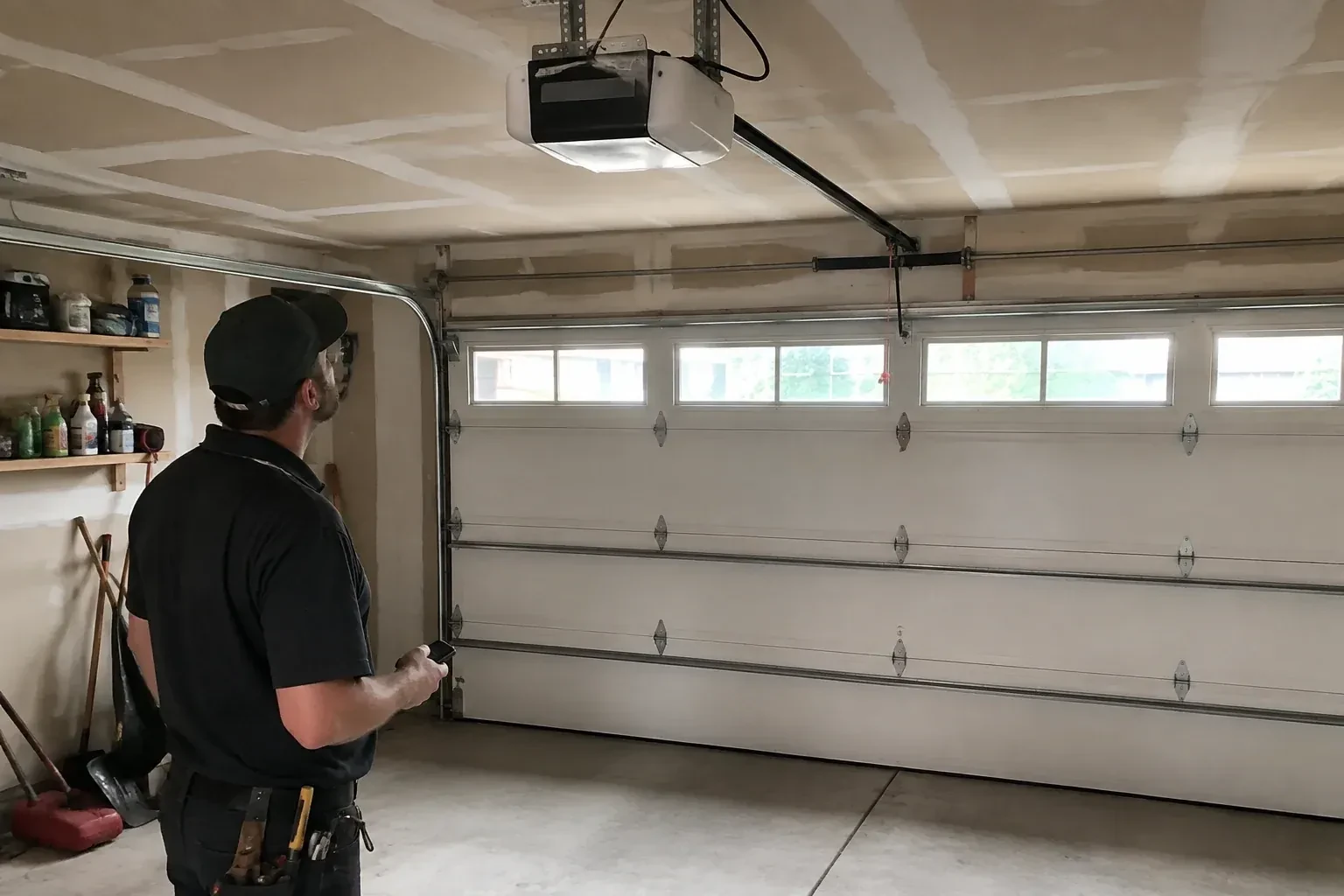
Openers have changed more than most people realise. Many units from before the early 1990s relied on motor resistance alone, without a photo-eye pair near the floor, though some carried a sensing edge or a close control instead. Fixed-code remotes set by tiny switches were common then too, so the same setting could open more than one door. A modern operator adds a beam across the opening, a force limit that reverses on contact, a rolling code that changes with every press, and a lock button that switches remotes off at night. Replacement brings all of those at once, and the safety tests are run in front of you.
How the visit goesYou swapped the old wooden door for a heavier insulated steel one, and the twenty-year-old opener that was kept has never settled. It strains on the way up, stops partway on cold mornings, and the rail shudders with every cycle.
Kitchener
How the visit goes
What the door is made of and how much it weighs
A single uninsulated steel door and a double wood door ask very different things of a motor and a rail. The technician notes the door's width and height, whether the sections are steel, aluminum, wood or insulated with a foam core, and how many sections there are. That information sets the motor rating and the drive type, and it decides whether the top section needs a reinforcement strut or a dedicated operator bracket before the door arm is attached. Lightweight steel and glazed doors flex under a concentrated pull at one point, so reinforcement spreads the load across the section and keeps it flat for years.
Setting travel and force
With power on, the technician teaches the operator where the door starts and stops. Newer units run a learn cycle that measures the travel and the effort the door needs; others have open and close limit screws and force dials that are set by hand. The close limit is set so the bottom seal compresses gently against the floor without the door straining, and the open limit so the top section stops short of the header bracket. Force is set to the lightest level that moves the door reliably in the garage's normal temperature, which is what lets the operator notice an obstruction and reverse rather than push through it.
Keeping the door balanced under the new operator
The new operator will run for many years if the door it moves stays balanced. Once a season, pull the release with the door closed, lift it by hand to about a metre and let go: it should stay there. If it drops or creeps upward, the springs have drifted and want a tune before the operator starts working harder to compensate. Watch too for a door that pauses or jerks at one point in its travel, which is usually a roller or a track bracket rather than the motor. A yearly service visit that checks balance, cables, rollers and the safety tests keeps both the door and the operator in step with each other.
Garage Door Opener Replacement
In the van
- Opener head unit
- Chain or reinforced belt
- Photo-eye sensors
- Door arm and door bracket
- Wall control console
What affects the quote
Same fees day, night or weekend
1Power at the head unit
If a grounded receptacle is already close to the operator, nothing is added. If one must be installed or moved, that electrical work is quoted separately by an electrical contractor.
2Motor rating for the door
An uninsulated single steel door and a heavy double door in insulated steel or solid wood call for different motor ratings, and the heavier door's operator is a larger piece of equipment.
3Wall-mount accessories
A wall-mount operator is installed with a cable tension monitor and a powered track lock, and sometimes a separate light kit, since the unit itself hangs no lamp over the garage.
Garage Door Opener Replacement: questions
Chain or belt: which should I choose?
Both move the same doors, so the choice is about sound and setting. Chain is the sturdy, simple workhorse and a fine fit for a detached garage or a workshop where a little noise is nobody's concern. Belt is the pick when a bedroom, nursery or office shares a wall or floor with the garage, because it starts and stops softly and hums rather than rattles. If the ceiling is crowded, a wall-mounted unit beside the spring shaft removes the rail altogether.
How many remotes and keypads can be added?
Capacity depends on the model: current operators hold anywhere from about eight to forty remote codes, so most households can pair every driver, a keypad, in-car buttons and a phone with room to spare. Remotes are added by holding the learn button on the head unit and pressing the remote; the console guide shows the steps and the technician leaves them written down. If a remote is lost later, clearing the memory and re-teaching the others takes only a few minutes.
What happens to the old opener?
The technician takes it away. The steel rail, chain and angle iron go to metal recycling and the head unit, with its motor and circuit board, goes to electronics recycling rather than the landfill. Old remotes are cleared from memory before they are discarded or handed back to you, and any wiring that is not being reused is removed from the ceiling and walls so the garage is left tidy.
Openers & Access
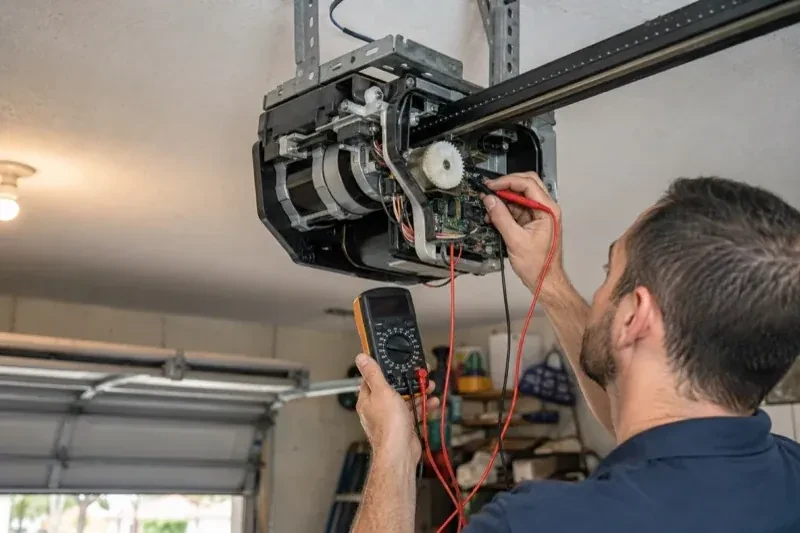
- Chain-Drive Opener RepairThe rail shakes when the door runs.
- Belt-Drive Opener RepairThere is a new squeal from the front of the rail, up near the header, on every cycle.
- Photo-Eye Sensor Alignment or ReplacementThere are no sensors at the floor at all, or a previous owner has wired the pair together up beside…
Garage Door Opener Replacement near you
Whatever kind of door is on your building in Kitchener, from a single wood door on an older house to a rolling steel door on a workshop, we have a service that fits it. The pages here explain what gets checked first, how the work proceeds and how to look after the result.