Springs · Kitchener
Garage Door Balance Adjustment
You pulled the red cord to move the door by hand during the power cut, lifted it to about waist height and let go. Instead of staying put, it kept climbing on its own and thumped into the fully open stop.
Garage Door Balance Adjustment
In plain words
Older detached garages often have extension springs stretched along each horizontal track rather than a shaft above the door. Balancing these works differently: the tension comes from how far each spring is stretched when the door is closed, and it is set by moving the cable attachment along the track hanger or changing the hook position. Both sides are adjusted equally so the door stays level, and the containment cable running through each spring is checked at the same time. The door is opened and clamped so the springs are relaxed during the work, then tested by hand across its travel until it rests where it is left.
How the visit goesSince the new insulated panels went in, the door feels like a different animal. It closes with a thud, the opener labours where it used to hum, and lifting it by hand takes a proper heave rather than a fingertip.
Kitchener
How the visit goes
Cables, drums and whether the door sits level
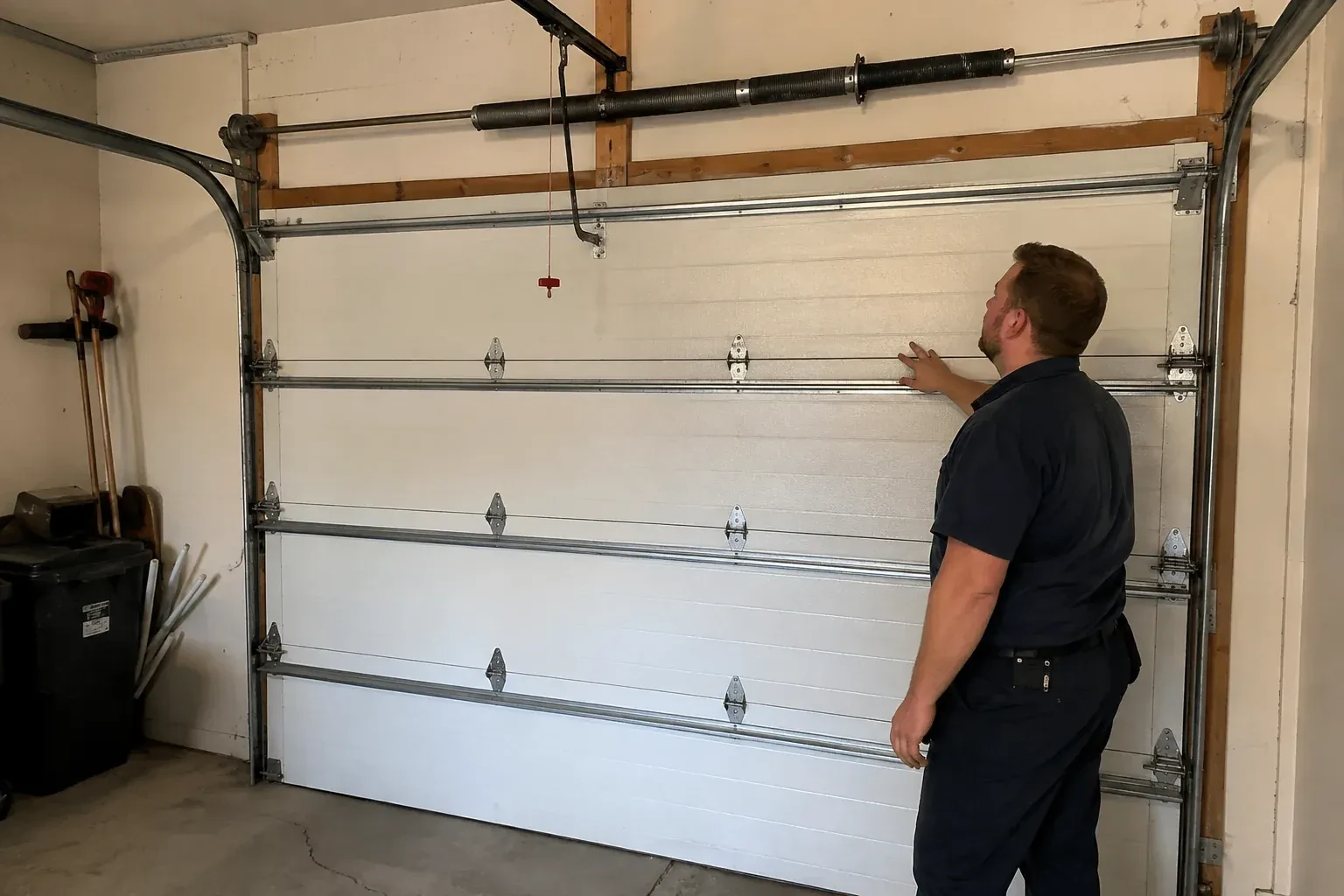
A door that is out of level is usually a cable story rather than a spring story. The technician checks that each cable wraps its drum in a single neat layer with the same number of wraps on both sides, that the drum set screws are tight on the shaft, and that neither cable is frayed or rusting at the bottom bracket. A tape across the bottom of the door in the closed position shows whether one corner sits high. If it does, the cables are reset on the drums so the door is level before spring tension is judged, because a crooked door binds in its track and feels heavy regardless of how the springs are wound.
Adding or releasing quarter turns on a torsion spring
With one winding bar seated firmly in the winding cone and a second ready, the technician loosens the cone's set screws and either adds tension by levering the bar upward or releases it by letting the bar down, always a quarter turn at a time, always with a bar in the cone. After each quarter turn the set screws are tightened onto the shaft, the clamp is removed and the door is lifted by hand to test. A door that sank now holds a little higher; a door that climbed now settles. On a two-spring door the same change is made to both springs so they share the load equally.
What the springs still have left
Part of the visit's value is knowing where the springs stand. If they were adjusted and left in place, you will have been told roughly how much life they appear to have and what signs mark their end: a door that grows heavy again within a season, a coil gap, or rust flaking from the wire. If they were replaced, the door starts a new cycle count and the note by the opener says when they went in. Either way, you can plan the next spring work on your own schedule rather than on the morning the car needs to leave and the door refuses to lift.
Garage Door Balance Adjustment
In the van
- Track clamps or locking pliers
- Winding bars
- Replacement hinges
- Torsion springs, matched pair
- Containment cables
What affects the quote
Same fees day, night or weekend
1Corroded or seized fasteners
Set screws and cone screws that have rusted solid take time to free, and badly corroded hardware is replaced rather than reused, which shows in the parts list.
2Weight added to the door
Insulation kits, windows or replacement sections may have taken the door beyond what its springs can carry. Weighing the door and specifying new springs to suit is quoted separately from a simple adjustment.
3Single or double door
A double door commonly carries more spring than a single, but the exact count follows the manufacturer's engineered hardware package for that door's weight rather than width alone: one, two or more torsion springs, or one or two extension springs per side. More springs means more adjustment and testing.
Garage Door Balance Adjustment: questions
How is door balance tested?
With the door closed, the opener is released so the door is free. It is lifted by hand to about a metre, then to fully open, and let go at each point. A door in balance holds its position; one that rises on its own is over-tensioned and one that drops is under-tensioned. The door should also move freely and no faster than the hand pushing it.
Can the opener's force setting be turned up instead of adjusting the springs?
The opener is built to move a balanced door, and its force limit is what makes it stop and reverse on contact. Raising that limit to lift a heavy door pushes the safety behaviour out of its intended range and works the motor and gears hard. The sound order is to balance the door first, then set the opener to suit it. Both are done in the same visit.
What information helps when I book the visit?
Whether the door drifts up, sinks, or hangs crooked when released; whether there is one spring on a shaft above the door or springs along the tracks; whether it is a single or double door and roughly how tall; when the springs were last changed if you know; what has been added to the door; and whether the opener strains, reverses or stalls. A photo of the spring area is useful.
Springs & Hardware
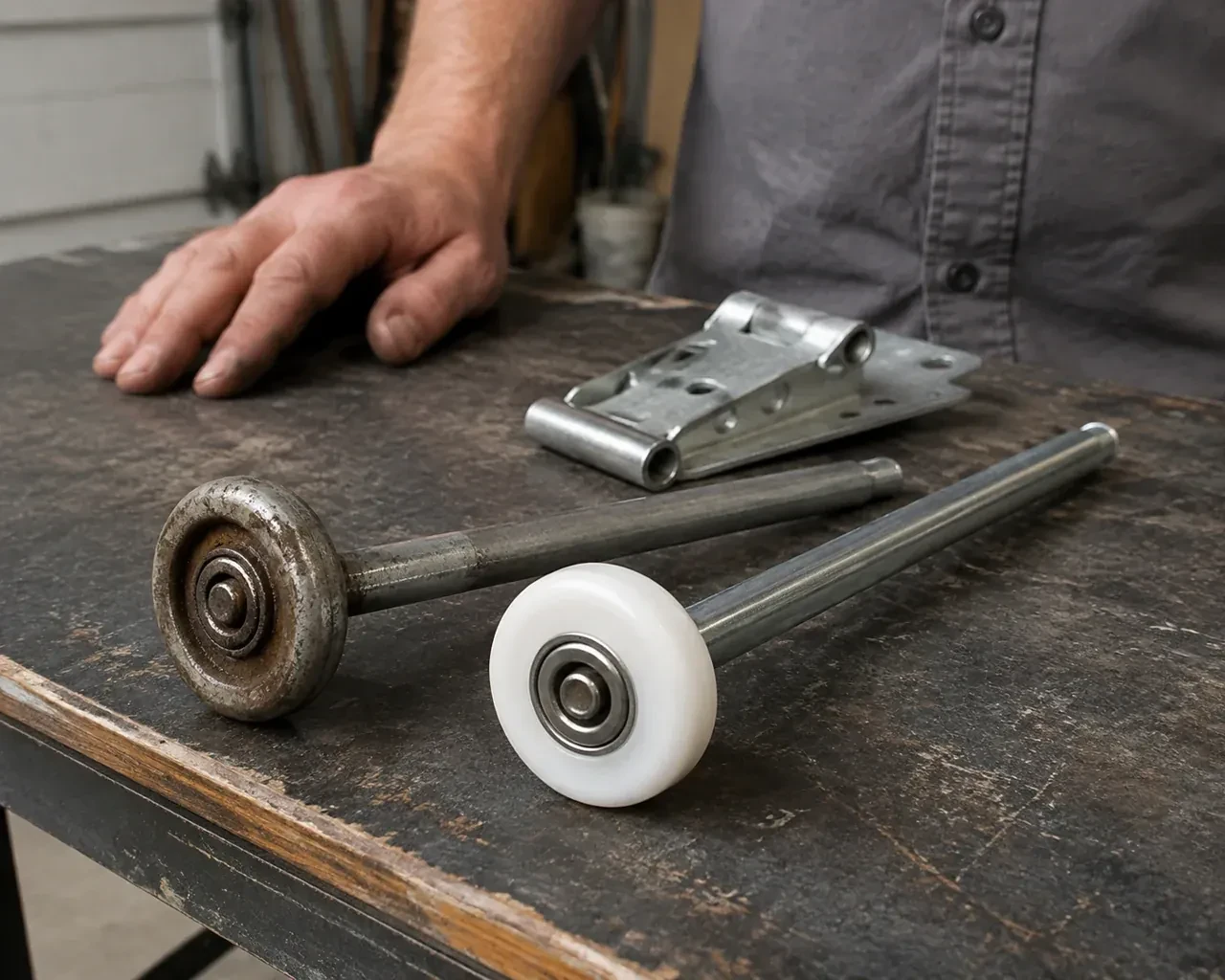
- Garage Door Hinge ReplacementOn the old wood door, one hinge has pulled away from the panel, dragging a screw and a chunk of…
- Garage Door Track Repair or ReplacementThe door climbs crooked, one side clearly ahead of the other.
- Garage Door Cable ReplacementStanding inside with the door closed, you notice the cable on the right side near the floor has…
Garage Door Balance Adjustment near you
Whatever kind of door is on your building in Kitchener, from a single wood door on an older house to a rolling steel door on a workshop, we have a service that fits it. The pages here explain what gets checked first, how the work proceeds and how to look after the result.