Springs · Kitchener
Garage Door Balance Adjustment in Kitchener
You pulled the red cord to move the door by hand during the power cut, lifted it to about waist height and let go. Instead of staying put, it kept climbing on its own and thumped into the fully open stop.
Garage Door Balance Adjustment
In plain words
Balance changes for ordinary reasons. Springs are rated for a certain number of cycles and lose a little tension as they age. A new bottom seal, insulated panels, a window section or a decorative overlay adds weight the original springs were never sized for. Rollers stiffen, hinges wear, and in a cold snap the whole system feels heavier for a few weeks. Any of these tips the door from weightless to a chore. A balance adjustment starts by identifying which of them is at work, then resets the springs to suit the door as it is today, and corrects the friction so the adjustment holds.
How the visit goesYou pulled the red cord to move the door by hand during the power cut, lifted it to about waist height and let go. Instead of staying put, it kept climbing on its own and thumped into the fully open stop.
Kitchener
How the visit goes
Cables, drums and whether the door sits level
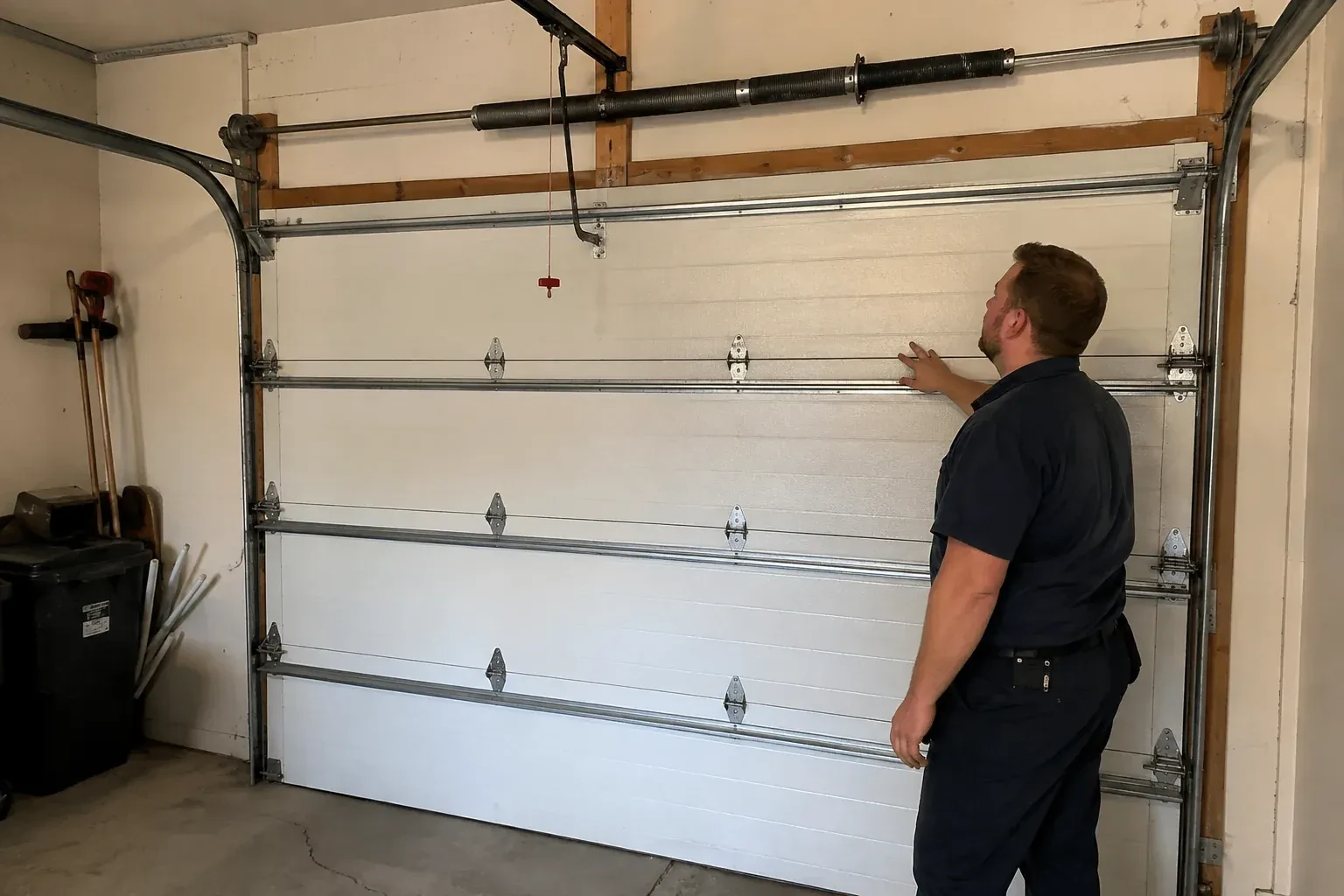
A door that is out of level is usually a cable story rather than a spring story. The technician checks that each cable wraps its drum in a single neat layer with the same number of wraps on both sides, that the drum set screws are tight on the shaft, and that neither cable is frayed or rusting at the bottom bracket. A tape across the bottom of the door in the closed position shows whether one corner sits high. If it does, the cables are reset on the drums so the door is level before spring tension is judged, because a crooked door binds in its track and feels heavy regardless of how the springs are wound.
Resetting the cables so the door sits level
If one corner of the door sat high, that is corrected before the final tension is set. The technician releases the spring tension enough to take the load off the drums, loosens the set screws on the drum on the low side, takes up or lets out cable until the door is level, and locks the drum again with the cable seated snugly in its groove. The bottom of the door is checked against the floor along its whole width, and both drums are confirmed to show the same number of wraps. Only then is the spring tension brought back up, because tension applied to a crooked door simply loads one side more.
Watching for the early signs of drift
You will now know what the door feels like when it is right, which makes small changes easy to spot. A door that begins to close with a heavier thud, an opener that pauses at the top or hums a little longer, a gap appearing under one corner, or a door that no longer quite stays fully open when released are all early signs. Cold weather can make the door feel a little heavier for a few weeks without anything being wrong. But a door that stalls, races or no longer passes its balance check is telling you to stop using it and book an inspection promptly rather than waiting out the season, since the cause is not always minor.
Garage Door Balance Adjustment
In the van
- Track clamps or locking pliers
- Winding bars
- Replacement hinges
- Torsion springs, matched pair
- Containment cables
What affects the quote
Same fees day, night or weekend
1Cold-weather visits
In a cold snap, a frozen bottom seal or stiff hardware has to be freed and warmed before balance can be judged honestly, and a winter call is quoted with that in mind.
2Rollers, hinges and friction repairs
Seized rollers or worn hinges that made the door heavy are pointed out and offered as optional items, since replacing them while the technician is at the door is efficient.
3Commercial or oversized doors
Doors wider or heavier than a standard residential opening use heavier springs, sometimes several on one shaft, and take longer to wind and test, which the quote reflects.
Garage Door Balance Adjustment: questions
How is door balance tested?
With the door closed, the opener is released so the door is free. It is lifted by hand to about a metre, then to fully open, and let go at each point. A door in balance holds its position; one that rises on its own is over-tensioned and one that drops is under-tensioned. The door should also move freely and no faster than the hand pushing it.
Can the opener's force setting be turned up instead of adjusting the springs?
The opener is built to move a balanced door, and its force limit is what makes it stop and reverse on contact. Raising that limit to lift a heavy door pushes the safety behaviour out of its intended range and works the motor and gears hard. The sound order is to balance the door first, then set the opener to suit it. Both are done in the same visit.
What information helps when I book the visit?
Whether the door drifts up, sinks, or hangs crooked when released; whether there is one spring on a shaft above the door or springs along the tracks; whether it is a single or double door and roughly how tall; when the springs were last changed if you know; what has been added to the door; and whether the opener strains, reverses or stalls. A photo of the spring area is useful.
Springs & Hardware
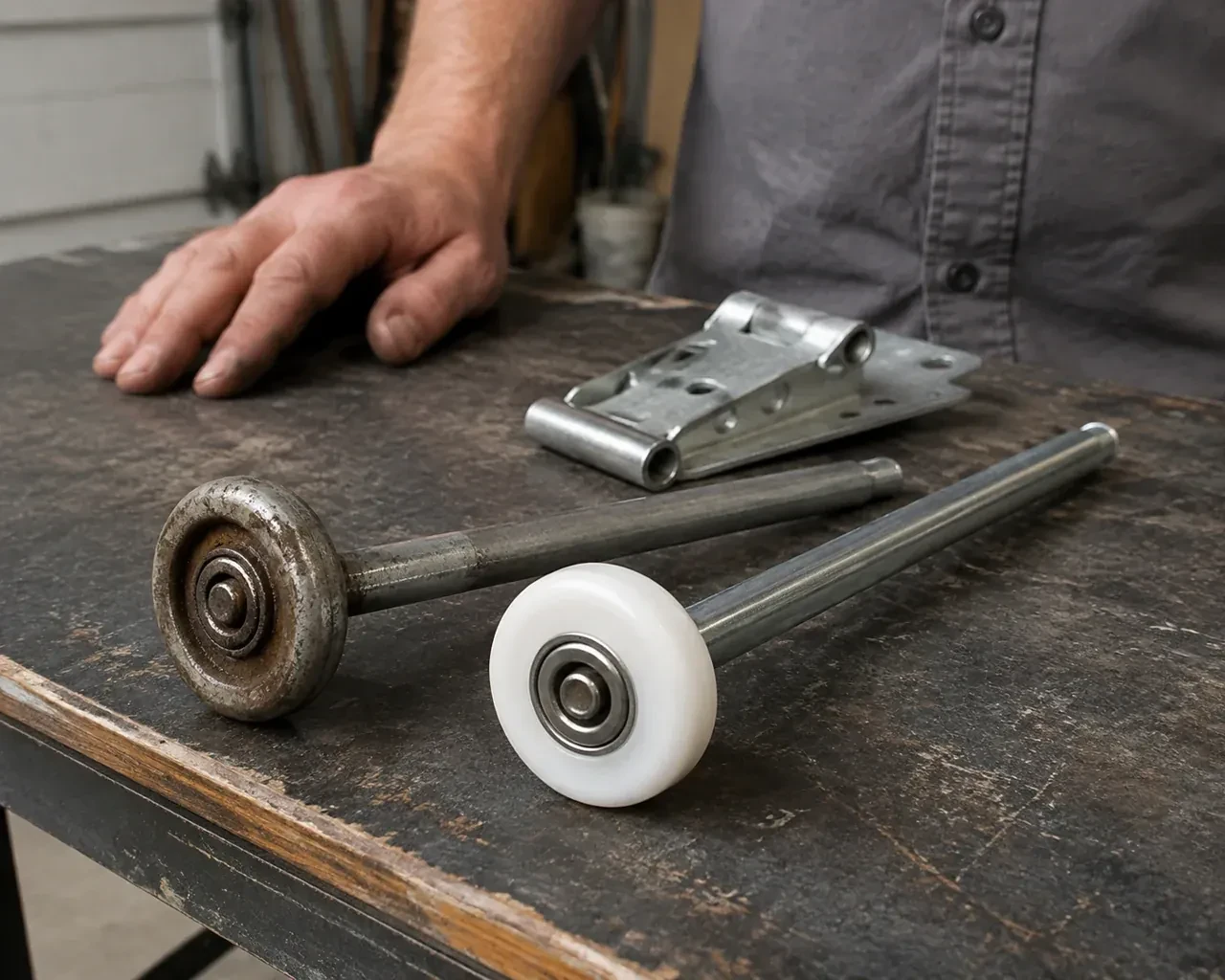
- Garage Door Hinge ReplacementOn the old wood door, one hinge has pulled away from the panel, dragging a screw and a chunk of…
- Garage Door Track Repair or ReplacementThe door climbs crooked, one side clearly ahead of the other.
- Garage Door Cable ReplacementStanding inside with the door closed, you notice the cable on the right side near the floor has…
Garage Door Balance Adjustment near you
Whatever kind of door is on your building in Kitchener, from a single wood door on an older house to a rolling steel door on a workshop, we have a service that fits it. The pages here explain what gets checked first, how the work proceeds and how to look after the result.