Springs · Laurentian Hills
Garage Door Balance Adjustment in Laurentian Hills
You pulled the red cord to move the door by hand during the power cut, lifted it to about waist height and let go. Instead of staying put, it kept climbing on its own and thumped into the fully open stop.
Garage Door Balance Adjustment
In plain words
An opener is designed to move a door that is already balanced, and every safety feature in it assumes that. The force it applies is limited so the door will stop and reverse when it meets something, and that limit only makes sense when the door is close to weightless. When springs lose tension, the opener has to lift real weight, its motor and gears work harder, and it may reverse or stall for no obvious reason. A balance adjustment puts the weight back on the springs where it belongs, so the opener can return to the light duty it was built for and its reversing behaviour is dependable again.
How the visit goesThe door has grown heavy so gradually you stopped noticing, until a visitor tried to lift it and could not. The opener still manages, but it sounds strained, the chain slaps on the way up, and the wall button gets pressed twice most mornings.
Laurentian Hills
How the visit goes
Cables, drums and whether the door sits level
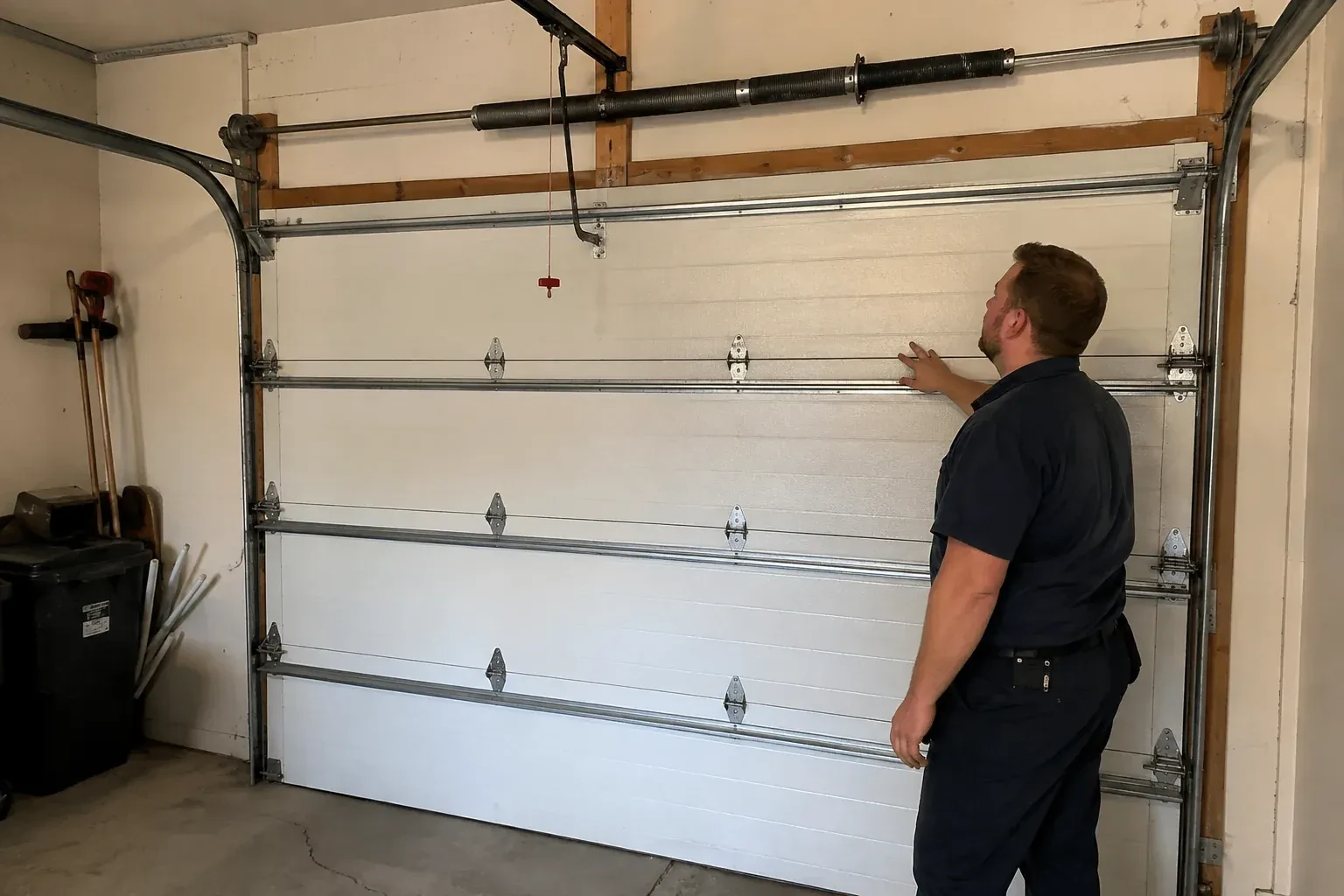
A door that is out of level is usually a cable story rather than a spring story. The technician checks that each cable wraps its drum in a single neat layer with the same number of wraps on both sides, that the drum set screws are tight on the shaft, and that neither cable is frayed or rusting at the bottom bracket. A tape across the bottom of the door in the closed position shows whether one corner sits high. If it does, the cables are reset on the drums so the door is level before spring tension is judged, because a crooked door binds in its track and feels heavy regardless of how the springs are wound.
Removing the friction that made the door feel heavy
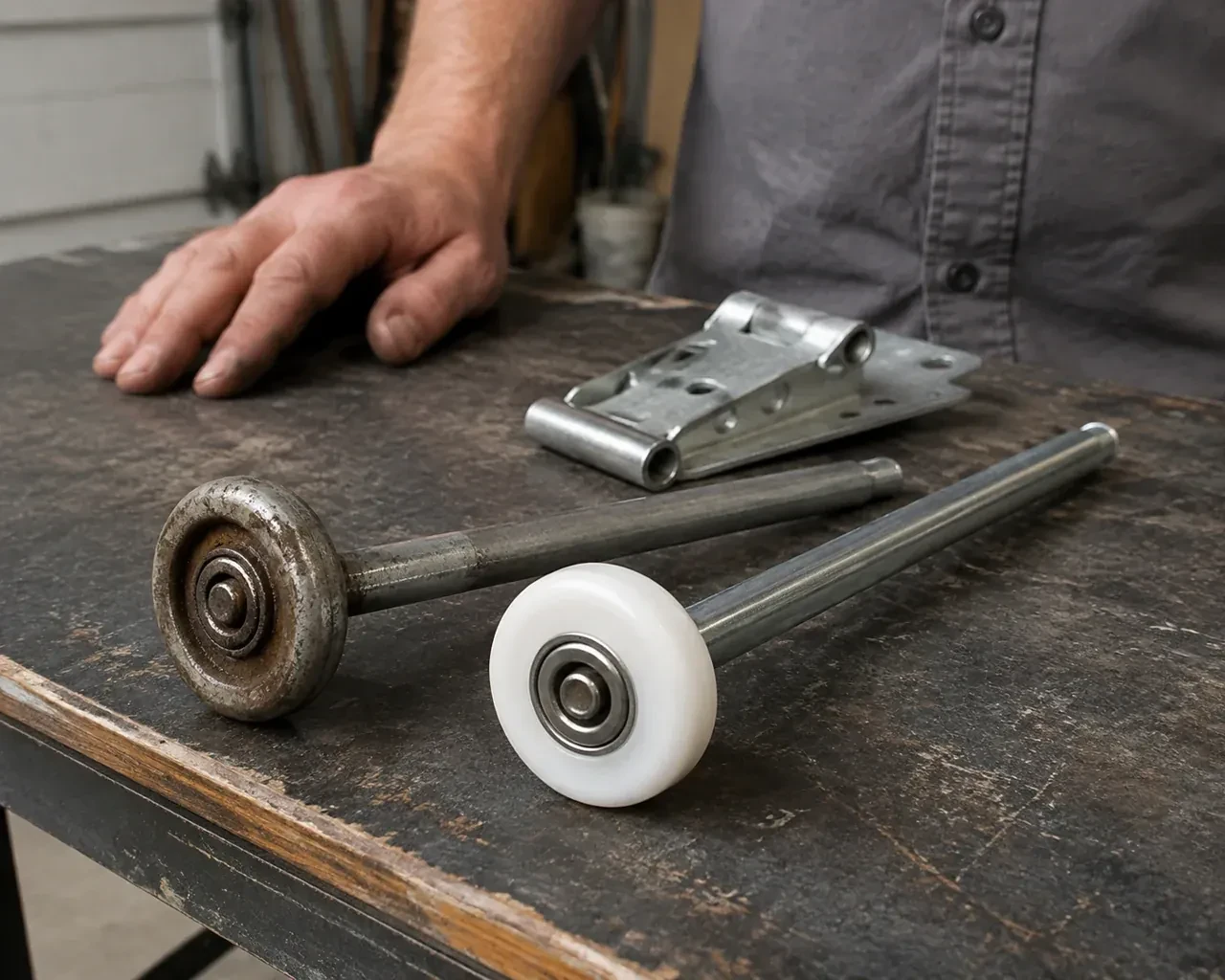
Where the inspection found drag, it is dealt with before the springs are judged. Seized or worn rollers are swapped for new ones, one hinge at a time so the door never leaves its track. Track sections knocked out of line are eased back plumb and their brackets tightened to the jamb; a dent is dressed out or the section replaced. Hinges with play are replaced and their screws driven into sound material. The springs, hinge pins, roller stems and bearings then receive a light coat of garage-door lubricant. After this the door is lifted again, and it is common for the heaviness to be largely gone before any turns are added.
Lubrication that keeps the adjustment true
A balanced door stays balanced longer when the parts that move on every cycle are kept easy. Twice a year, spray a lubricant made for garage doors along the torsion spring, onto each hinge pin, the roller stems and bearings, and the bottom bracket pins, then run the door a few times. Wipe the tracks clean but leave them dry, since a coated track collects grit and lets rollers slide. Avoid heavy grease. Friction is part of what the hand test measures, so a door that is well lubricated reads true, and the springs are not asked to overcome drag that a moment's maintenance would remove.
Garage Door Balance Adjustment
In the van
- Track clamps or locking pliers
- Winding bars
- Replacement hinges
- Torsion springs, matched pair
- Containment cables
What affects the quote
Same fees day, night or weekend
1Adjustment or replacement
If the inspection shows springs that can be wound to the door's weight, the quote covers adjustment. Springs that are undersized or worn out mean replacement, which is priced as separate work and explained first.
2Door height and lift type
Taller doors and high-lift or vertical-lift hardware carry more spring turns and different drums, so setting and testing them takes longer than a standard seven-foot door.
3Access to the spring shaft
Shelving, bikes or storage close to the header, a very high ceiling or a tight low-headroom installation slow the work. Clearing the area beforehand helps the time quoted.
Garage Door Balance Adjustment: questions
How is door balance tested?
With the door closed, the opener is released so the door is free. It is lifted by hand to about a metre, then to fully open, and let go at each point. A door in balance holds its position; one that rises on its own is over-tensioned and one that drops is under-tensioned. The door should also move freely and no faster than the hand pushing it.
Can the opener's force setting be turned up instead of adjusting the springs?
The opener is built to move a balanced door, and its force limit is what makes it stop and reverse on contact. Raising that limit to lift a heavy door pushes the safety behaviour out of its intended range and works the motor and gears hard. The sound order is to balance the door first, then set the opener to suit it. Both are done in the same visit.
What information helps when I book the visit?
Whether the door drifts up, sinks, or hangs crooked when released; whether there is one spring on a shaft above the door or springs along the tracks; whether it is a single or double door and roughly how tall; when the springs were last changed if you know; what has been added to the door; and whether the opener strains, reverses or stalls. A photo of the spring area is useful.
Springs & Hardware
- Garage Door Hinge ReplacementOn the old wood door, one hinge has pulled away from the panel, dragging a screw and a chunk of…
- Garage Door Track Repair or ReplacementThe door climbs crooked, one side clearly ahead of the other.
- Garage Door Cable ReplacementStanding inside with the door closed, you notice the cable on the right side near the floor has…
Garage Door Balance Adjustment near you
Our technicians arrive in Laurentian Hills ready for the everyday repairs: torsion and extension springs, lifting cables and drums, rollers, hinges, bottom seals, photo-eyes and opener gears. For bigger decisions, such as a new insulated door or a modern opener, we measure, advise and install as a separate service.