Repairs · Kitchener
Garage Door Safety Inspection
It has been a hard winter. The bottom seal froze to the slab twice, the opener groaned each morning, and one afternoon you noticed a cable on the left side hanging with a little slack in it.
Garage Door Safety Inspection
In plain words
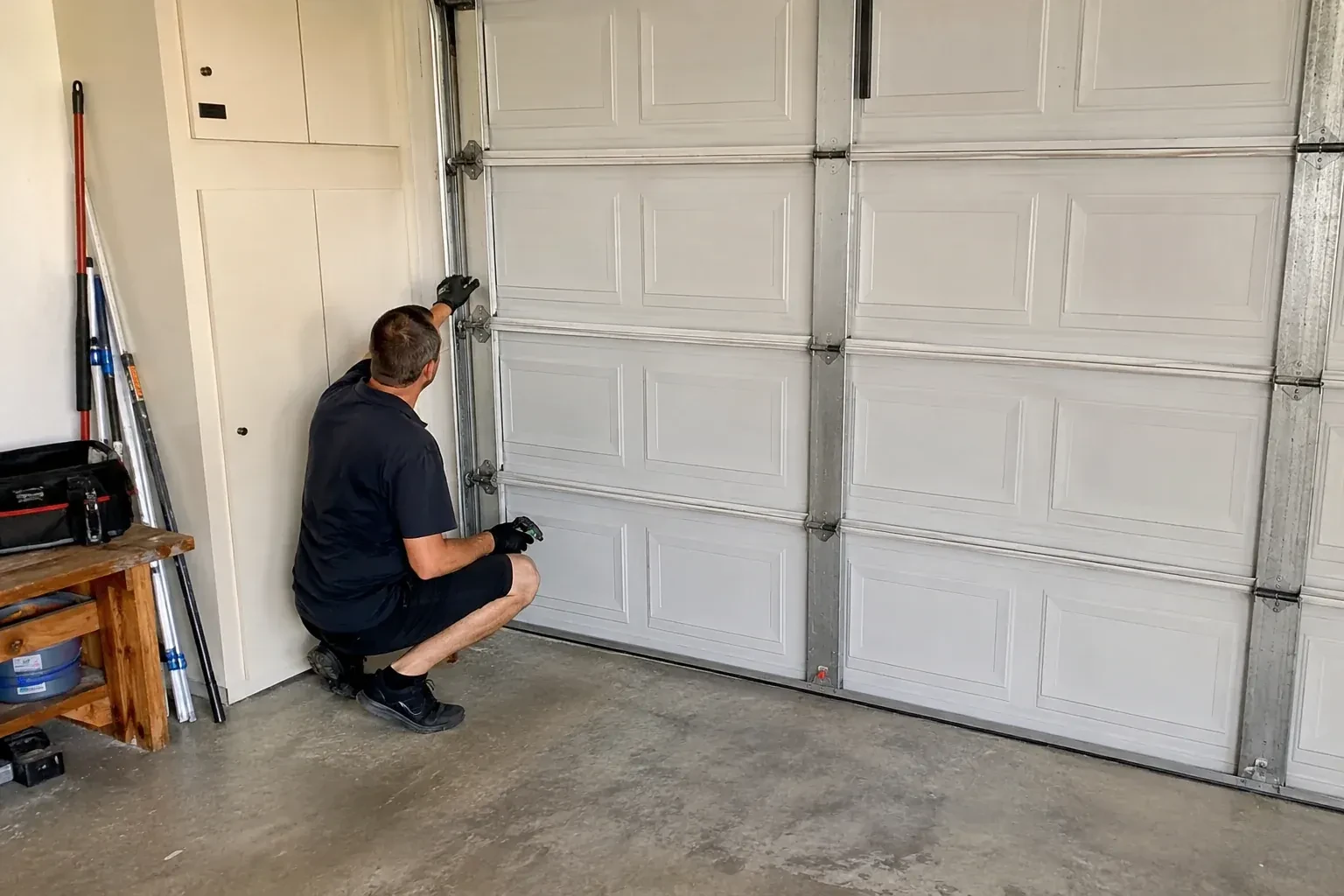
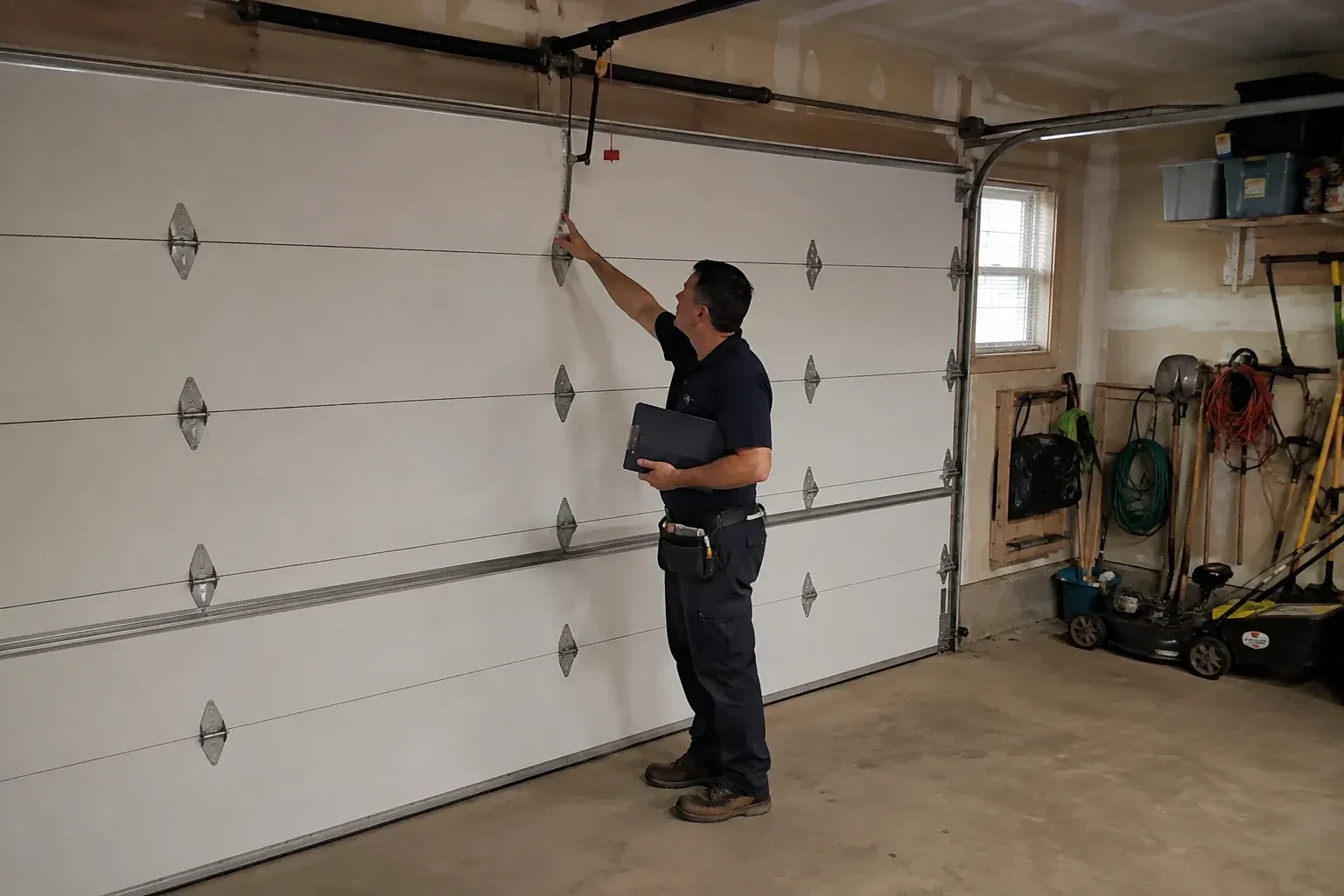
The visit runs in a settled order. First the door and opener are identified and the right test procedure looked up. Then a visual walk of the closed door, from the top section down to the bottom seal, and along both tracks. Next a full cycle under power while the technician listens and watches. Then the opener is disconnected for the manual balance check, reconnected for the reversal and photo-eye tests, and the controls, release cord and mounting brackets are checked. Finally the findings are explained at the door and written up, so you know exactly where the door stands before anyone leaves.
How the visit goesDuring the power outage you pulled the red cord and tried to lift the door by hand. It felt like lifting a piano, and when you let go part-way it sank back toward the floor on its own.
Kitchener
How the visit goes
Putting a name to the door and the opener
The first thing the technician does is read labels. The door's model tag is usually on the inside of an end stile or the bottom section, and the opener's is on the motor head; between them they tell the technician the door's weight class, the lift hardware it was built with and the exact test procedure the opener maker publishes. That matters because reversal settings, photo-eye mounting heights and force limits differ between models and generations. Writing the model numbers down at the start also means the report is tied to a specific door, so the next person to look at it, years from now, starts from the same page.
Sorting the findings at the door
Before packing up, the technician walks you through what was found, in front of the door so each item can be pointed at. Findings are sorted into four groups: in good order, maintenance, planned repair, and stop-use. For each repair, you hear what the part does, why it matters and roughly what the work involves, so you can decide in your own time. If anything falls into the stop-use group, you are shown the reason and the door is left in a safe position with the opener disconnected until that item is corrected. The written record follows, with the model numbers, the measurements and the photographs.
Carrying the door through winter
The technician leaves you with the handful of habits that matter in a cold climate. Keep the threshold clear of packed snow so the door closes on the floor and not on a ridge of ice. On a mild day, wipe the salt off the bottom brackets, the lowest hinges and the bottom stretch of each cable, then give them a light mist of lubricant. Wipe the photo-eye lenses when the grime of a slushy week builds up. If the bottom seal freezes to the slab, free it by hand before running the opener rather than asking the motor to tear it loose. These take minutes across a season and spare the cables, the seal and the opener.
Garage Door Safety Inspection
In the van
- Tape measure and level
- Socket set and nut drivers
- Inspection checklist and report form
- Work light and inspection mirror
- Silicone garage-door lubricant
What affects the quote
Same fees day, night or weekend
1Distance to the property
Travel is part of every visit. A property across town and one at the end of a rural road involve different driving time, and the quote reflects the trip.
2Findings that change the scope on the day
If a stop-use item turns up, securing the door and explaining the correction takes extra time on the visit. That, and any work you approve, is quoted separately before it starts.
3High-lift, oversized or custom doors
Doors taller or wider than a standard residential opening, or with high-lift tracks and drums, have more to measure and take longer to observe through a cycle.
Garage Door Safety Inspection: questions
Why does my door reverse on the way down for no reason?
Most often it is the photo eyes. A sensor knocked slightly out of line, a lens with a film of road grime, a loose wire, or low afternoon sun shining straight into one eye will each break the beam as far as the opener is concerned. The next candidates are a down-force setting that has drifted, a binding roller or a door that has gone out of balance. The inspection checks each in turn.
Is the inspection a repair visit?
It is a look and a record first. Small maintenance items such as lubrication, cleaning and aligning the photo eyes and tightening fasteners can be done on the spot if you wish. Anything involving spring tension, cables, drums, worn rollers or damaged sections is written up with a clear explanation and quoted as its own job, so you decide with the full picture in front of you.
How long does the visit usually take?
Plan for roughly an hour for a single door in ordinary condition, and longer for a double door, a second door on the property, or a door with a history that needs following up. Maintenance done on the spot adds a few minutes. A post-impact assessment, where the technician traces the force through the hardware, takes longer than a routine check. You are told at the door if the scope is growing.
Repair & Maintenance
- Off-Track Garage Door ResetThere was a loud bang from the garage, then silence.
- Garage Door Panel ReplacementYou misjudged the last metre of the driveway and felt the bumper meet the door.
- Garage Door Bottom Seal ReplacementThere are mouse droppings along the wall behind the recycling bins, and at one bottom corner of the…
Garage Door Safety Inspection near you
Whatever kind of door is on your building in Kitchener, from a single wood door on an older house to a rolling steel door on a workshop, we have a service that fits it. The pages here explain what gets checked first, how the work proceeds and how to look after the result.